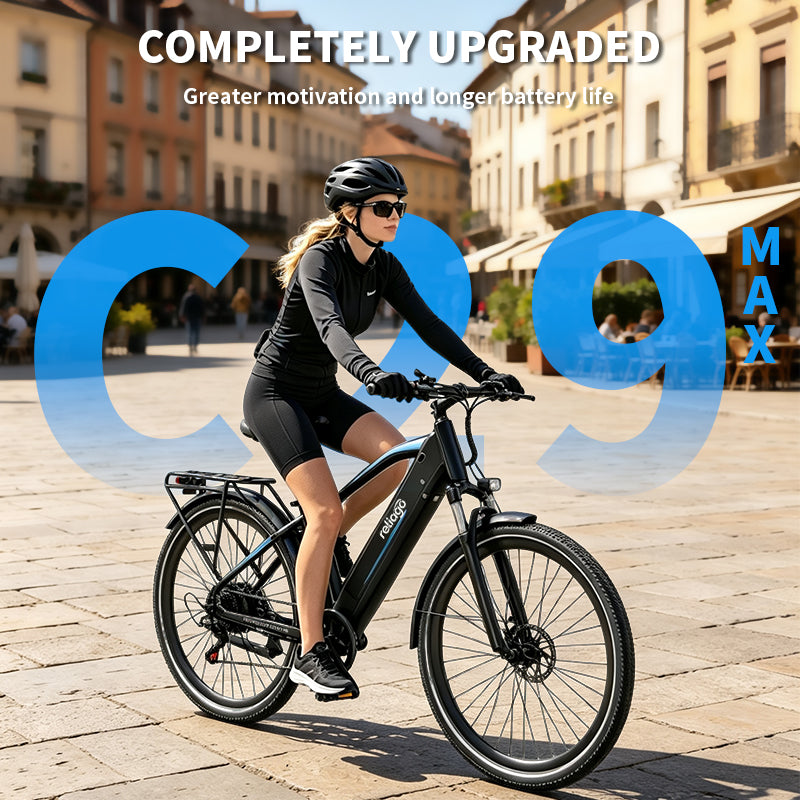
How Long Do Ebike Tires Last? Lifespan & Wear Prevention Guide
How Long Do Ebike Tires Last? The Ultimate Lifespan and Maintenance Guide
Electric bicycles have completely revolutionized sustainable transportation, allowing riders to travel longer distances at much higher speeds. However, the unique mechanical forces of an electric bike mean that certain components experience significantly accelerated wear and tear. Among these, the ebike tire bears the ultimate brunt of daily operation. Understanding the factors that govern your wheel setup is crucial for ensuring rider safety, optimizing battery efficiency, and reducing long-term ownership costs. In this comprehensive technical guide, we will answer your most pressing questions regarding maintenance, diagnose the root causes of accelerated rubber degradation, and deliver an in-depth analysis of structural options to help you choose the best configuration for your daily commute.

Table of Contents
- How long do ebike tires last? / How often to replace ebike tires?
- Why does my ebike tire wear out so fast?
- Tubeless vs tubed ebike tires: which is better?
- Signs It Is Time to Replace Your Rubber
- Tubeless vs. Tubed Ebike Tire Comparison Table
- Proven Strategies to Extend Your Lifespan
- Frequently Asked Questions (FAQ) About Ebike Tire Wear
How long do ebike tires last? / How often to replace ebike tires?
The operational lifespan of a dedicated ebike tire typically ranges between 1,500 and 3,000 miles (2,400 to 4,800 kilometers) for the rear wheel, while a front wheel can often last anywhere from 3,000 to 4,500 miles. In contrast to traditional, non-motorized bicycle tires that frequently achieve 4,000 to 5,000 miles before needing replacement, electric bike tires must be replaced much more frequently due to the structural demands placed on them by high-torque electric motors.
When analyzing how often to replace ebike tires, you must evaluate three distinct riding categories that directly dictate the degradation rate of your tread compound:
1. City Commuting and Paved Road Surfaces
If you primarily ride your electric bike on smooth concrete city paths, bike lanes, and urban asphalt for daily commuting, your rubber will face consistent, predictable friction. Under these optimized conditions, a high-quality, commuter-specific model featuring a hardened center tread line can comfortably last between 2,000 and 3,000 miles. Wear in this category manifests as a gradual flattening of the center contact patch, which slowly compromises your wet-weather hydroplaning resistance over time.
2. Off-Road Trails, Gravel, and Mountain Terrains
Riders utilizing electric mountain bikes (eMTBs) or dual-sport adventure ebikes on loose gravel, rocky fire roads, mud, and technical singletrack trails will experience accelerated casing wear. The sharp, abrasive nature of rocks and loose stones cuts into the rubber blocks, while aggressive cornering tears at the side knobs. For off-road enthusiasts, an aggressive knobby tread usually lasts between 1,200 and 1,800 miles before the knobby profiles lose their structural integrity and fail to provide adequate lateral climbing grip.
3. Heavy-Duty Cargo Transport and Utility Deliveries
Commercial delivery riders and cargo e-bike owners who haul heavy payloads, groceries, or commercial packages experience the fastest wear rates in the industry. The constant, extreme downward force compressing the tire casing increases the friction coefficient dramatically. In this heavy-duty commercial application, it is not uncommon to replace the rear wheel drive assembly every 1,000 to 1,500 miles to maintain safe stopping distances and eliminate catastrophic blowout risks on busy city streets.
Why does my ebike tire wear out so fast?
Many first-time electric bicycle owners are shocked by how quickly their factory-installed rubber degrades compared to their traditional acoustic bicycles. If you find yourself asking, "Why does my ebike tire wear out so fast?", the answer lies in a combination of physics, mechanical engineering, and common rider habits. There are four primary technical catalysts behind this rapid degradation:
The Weight Disadvantage of Motorized Systems
An electric bike is substantially heavier than a standard bicycle. A typical commuter e-bike carries a heavy mid-drive or hub motor (8 to 15 lbs) and a high-capacity lithium-ion battery pack (7 to 12 lbs), pushing the base frame weight to 55–85 pounds. When you add the rider’s weight and cargo, the constant static and dynamic downforce compressing the rubber compound increases exponentially. This massive load profile generates immense internal casing heat during long rides, accelerating the breakdown of chemical polymer bonds within the rubber compound and causing it to slough off much faster against the abrasive road surface.
Instant Motor Torque and Shear Stress
Unlike human legs that deliver smooth, progressive rotational power, electric motors produce maximum torque instantly from a dead stop. Whether you are using a 750W rear hub motor or a high-torque mid-drive motor, this burst of rotational energy transfers directly into the rear wheel contact patch. This creates intense linear shear stress, subtly scraping micro-layers of rubber off the tread face every single time you accelerate from a traffic light or climb a steep hill. This explains why rear drive tires wear out up to two to three times faster than front steering wheels.
High Braking Kinetic Energy and Friction Heat
Because electric bikes easily cruise at sustained speeds of 20 mph to 28 mph (Class 3), they possess significantly more kinetic energy than a standard bicycle traveling at 10–12 mph. Stopping a heavy, fast-moving vehicle requires massive deceleration force. When you squeeze your hydraulic disc brakes, that immense kinetic energy is converted into intense friction heat directly at the tire-to-ground contact boundary. Hard braking habits from high speeds rapidly erase the tread pattern, creating localized flat spots and stripping the tire of its directional channels.
Suboptimal Inflation and Lower PSI Management
Riding with insufficient tire pressure is the leading cause of premature failure worldwide. Many riders neglect to check their tire pressures weekly, letting them drop below recommended levels to get a softer, cushioned ride. However, low pressure causes the tire sidewalls to flex excessively under the heavy weight of an e-bike. This excessive flexing leads to internal casing delamination, rim pinching, uneven outer edge shoulder wear, and an overall reduction in battery range due to increased rolling resistance.
Tubeless vs tubed ebike tires: which is better?
Choosing between a tubeless vs tubed ebike tires configuration is one of the most critical structural decisions you will make when upgrading your electric bicycle. Both systems have unique technical characteristics that impact flat prevention, roadside repair complexity, overall weight, and ride comfort. Let's look at a detailed breakdown of both setups to determine which option is best for your specific riding style.
The Traditional Tubed System: Pros and Cons
The classic tubed setup utilizes a standalone inflatable inner tube (butyl rubber or lightweight TPU) inside a durable outer tire casing. This system has been the bicycle standard for over a century due to its simplicity and straightforward maintenance mechanics.
- The Advantages: Tubed configurations are exceptionally easy to maintain for casual riders. They do not require specialized, airtight rim tapes, tubeless valves, or messy liquid latex sealants. If you get a flat tire, you simply remove the wheel, patch or replace the inner tube using basic tools, and re-inflate. Furthermore, tubed tires can sit idle in a garage for months without requiring maintenance, as there is no liquid sealant inside to dry out over time.
- The Disadvantages: Inner tubes are highly vulnerable to "pinch flats" or "snake bites." This occurs when your heavy e-bike hits a sharp pothole or curb at high speed, compressing the tire fully to the rim lip and pinching two distinct holes into the inner tube. Additionally, if a thorn, wire fragment, or glass shard penetrates the outer tread, it will instantly puncture the pressurized tube, resulting in an immediate loss of air that leaves you stranded on the roadside.
The Modern Tubeless System: Pros and Cons
A tubeless setup eliminates the inner tube completely. Instead, an airtight environment is created by utilizing a specialized tubeless-compatible rim, airtight rim tape, a dedicated sealing valve, and a liquid latex tire sealant poured directly into the tire cavity. The tire bead locks mechanically into the rim hook to hold air pressure securely.
- The Advantages: Tubeless technology offers elite flat protection that is perfect for heavy electric bikes. If a thorn, tack, or small nail pierces your tread, the internal liquid latex sealant rushes to the hole, reacts with the escaping air, and coagulates instantly—clogging the puncture within seconds while you keep riding. Because there is no tube inside, pinch flats are mathematically eliminated, allowing you to run lower, more comfortable tire pressures. Lower PSI increases your contact patch size, providing superior traction on wet roads, loose gravel, and muddy trails.
- The Disadvantages: The initial setup and installation process can be technically challenging and messy. Seating the stiff bead of a tubeless tire often requires a high-volume air compressor or a specialized flash pump. Furthermore, the liquid sealant inside the tire does not last forever; it slowly cures and dries out, requiring you to top off the liquid sealant through the valve core every 3 to 6 months to maintain optimal self-healing puncture protection.
Signs It Is Time to Replace Your Rubber
Riding on worn-out, bald, or structurally compromised rubber is highly dangerous on an electric bike due to the high speeds and heavy weights involved. Inspect your wheel assemblies closely for the following wear indicators:
- Center Tread Obliteration: Look down at the profile of your tire. If the center section has worn completely flat, losing its directional siping, grooves, or knobby blocks, your ability to channel water away is gone. This increases your risk of dangerous hydroplaning on wet asphalt.
- Exposed Protection Belts: Many premium brands incorporate a brightly colored (often blue, green, or red) anti-puncture sub-tread layer directly beneath the outer rubber casing. If you start seeing hints of this colored internal protective layer peeking through your tread, replace the tire immediately.
- Sidewall Dry Rot and Cracking: If your bike is stored in direct sunlight or exposed to temperature extremes, the rubber compounds will slowly lose their essential oils. Check the sidewalls for spiderweb-like cracks or dry rot. Cracked sidewalls cannot safely support heavy e-bike loads and are highly susceptible to sudden blowouts.
- Casing Distortion and Bulging: If you notice an unusual hop, wobble, or visible bulge in your tire while spinning the wheel, it indicates that the internal woven fabric plies have snapped or separated from the rubber matrix. This is a critical structural failure that requires an immediate replacement.
Tubeless vs. Tubed Ebike Tire Comparison Table
The following performance metrics table helps you analyze the technical differences between tubeless and tubed setups, enabling you to select the optimal setup for your electric bicycle platform.
| Performance Metric | Tubed Wheel System | Tubeless Wheel System | Winner for E-Bikes |
|---|---|---|---|
| Small Puncture Resistance | Poor (Tube pops instantly) | Excellent (Self-heals via liquid latex) | Tubeless |
| Pinch Flat Protection | Low (Vulnerable to rim pinches) | Immune (No inner tube to pinch) | Tubeless |
| Installation Complexity | Easy (Simple hand tools) | High (Requires airtight tape & compressor) | Tubed |
| Roadside Repair Speed | Moderate (Requires wheel removal) | Fast (Use tire plugs without wheel removal) | Tubeless |
| Long-Term Maintenance | Low (Set it and forget it) | Moderate (Requires sealant top-off every 3-6 mos) | Tubed |
Proven Strategies to Extend Your Lifespan
You can actively maximize your tread mileage and save money on replacements by adopting these four professional maintenance strategies:
1. Implement Front-to-Rear Tire Rotation
Because your rear hub or mid-drive motor handles 100% of the drive torque and bears the majority of your body weight, the rear tire wears out twice as fast as the front steering tire. To counter this uneven wear, rotate your tires every 800 to 1,000 miles. Moving the less-worn front tire to the rear position balances out the overall wear, extending the lifespan of your entire wheel set before needing a full replacement.
2. Adopt Smooth, Progressive Acceleration Habits
If your electric bike features an independent thumb or twist throttle, avoid pinning it down fully from a complete stop. Launching your heavy e-bike with maximum motor power places extreme stress on the rubber tread compound, causing it to wear down prematurely. Instead, pedal gently to get the bike rolling before engaging motor power. This progressive acceleration protects your tread and significantly extends your battery range per charge.
3. Maintain Strict PSI Alignment Weekly
Set a recurring weekly reminder to check your tire pressure using a high-quality digital pressure gauge. Air naturally permeates through butyl rubber and tubeless casings over time. Keeping your tires inflated to the upper end of the manufacturer's recommended PSI range minimizes rolling resistance, lowers runtime heat buildup, and prevents dangerous pinch flats on rough urban roads.
Frequently Asked Questions (FAQ) About Ebike Tire Wear
Q: Can I replace my ebike tire with a standard mountain bike tire?
A: No, standard mountain bike tires are engineered for lightweight human-powered frames and lack the heavy casing plies, steel bead reinforcement, and high-mileage rubber compounds found in dedicated e-bike rubber. Using a regular tire can lead to rapid tread wear and unsafe sidewall failures.
Q: How often should I check the air pressure in my ebike tires?
A: You should inspect your tire pressure at least once a week using a dedicated digital pressure gauge. Heavy electric bikes are highly sensitive to small air pressure drops, which can accelerate shoulder wear and diminish battery efficiency.
Q: What is the average cost to replace an ebike tire at a professional bike shop?
A: A premium, e-bike certified tire typically costs between $40 and $90 depending on size and puncture protection features. Professional labor fees for installation usually run from $25 to $50 per wheel, with rear hub motor assemblies commanding a premium due to electrical harness disconnections.
Q: Does riding at high speeds shorten my ebike tire lifespan?
A: Yes, consistently riding at high speeds (20–28 mph) generates substantial friction heat along the tire contact patch. This heat accelerates rubber compound degradation and increases tread wear compared to riding at lower speeds.
Upgrade Your Electric Ride with Premium Ebike Tires
Don't let worn-out, unreliable tread ruin your daily commute or trail weekend. Upgrading to a premium, certified e-bike wheel setup ensures maximum traction, elite flat protection, and peak battery performance. Browse our comprehensive catalog of high-mileage, puncture-proof tires today to find the perfect match for your electric bike platform!